

There are few things better than watching a dog at the beach. The explosive running, the joyful splashing, and the pure excitement of a pup discovering the waves for the first time is one of the absolute best perks of living in Southern California.
There are also few things more stressful than an unprepared dog at a crowded beach. A dog that drags you across the sand toward a family’s picnic, lunges at passing terriers, completely ignores your calls, or has a sensory meltdown in the middle of a crowd is not having fun. Neither are you, and neither is anyone else around you.
The beach environment is a high-stakes, high-distraction arena. To navigate it safely, you need targeted dog training for the Los Angeles beach lifestyle. Fortunately, beach readiness is entirely trainable. Here is how to prepare your dog for a safe, stress-free day on the coast.
The Local Reality: Where Can You Actually Go?
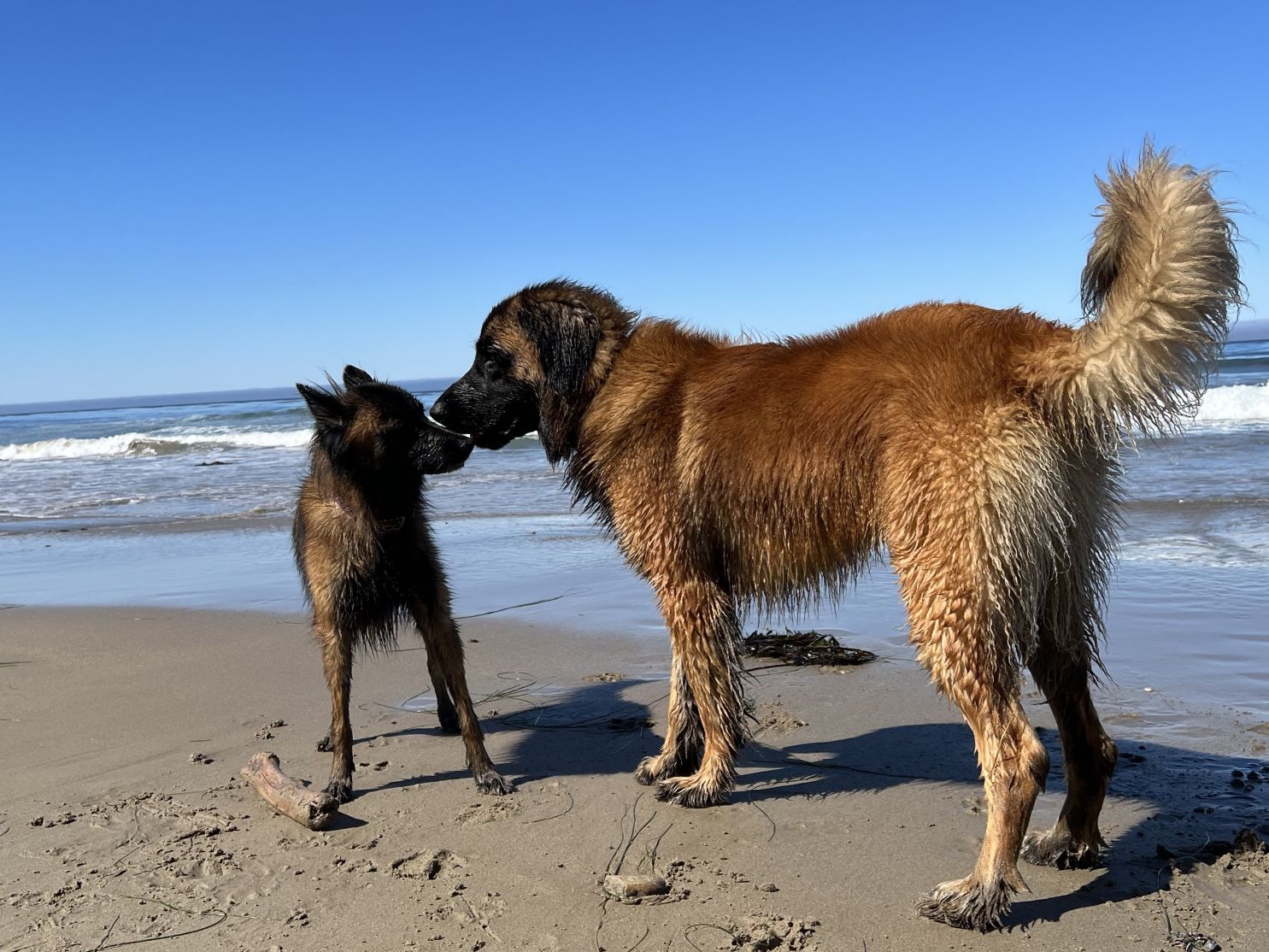
Before packing your car, you need to know the rules. Los Angeles County has strict regulations regarding dogs on the sand:
-
The Off-Leash Sand (Rosie’s Dog Beach, Long Beach): This is the premier off-leash dog beach in the immediate LA area. It is a fantastic space, but it gets incredibly crowded on weekends. Your dog’s recall and social manners must be rock-solid here.
-
The Leashed Trails & Parks (Leo Carrillo, Malibu): Perfect for dogs who love the ocean air but aren’t ready for the unpredictable nature of an off-leash free-for-all. Dogs must remain on a leash, making it a great controlled training ground.
-
The Paved Strands (Santa Monica, Venice, Hermosa Beach): While dogs are legally prohibited on the sand itself in these areas, they are welcome on the paved boardwalks and strands. These paths are excellent for practicing loose-leash walking amidst heavy distractions like skateboards, bicycles, and tourist crowds.
5 Essential Skills Your Dog Needs Before Hitting the Sand
Because the oceanfront presents unique environmental stressors, your dog needs a specific set of foundational skills before you make the drive down the PCH.
1. Proofed, Distraction-Level Recall
If you plan to unclip that leash at Rosie’s Dog Beach, a casual backyard recall will not cut it. Your dog must return to you instantly, even if a stray frisbee is flying past, a child is running by with a hot dog, or another dog is initiating play. If their recall is situational, keep them safely on a long line until you have built up their tolerance.
🎯 Need to solidify your bond? Our specialized Rock the Recall workshop is designed specifically to transition your dog’s listening skills from the quiet living room to high-stakes, high-distraction environments like the beach.
2. Low-Arousal Loose Leash Walking
The journey to the sand involves navigating packed parking lots, narrow boardwalks, and a sensory overload of ocean smells. A dog that pulls frantically the entire way from the car will arrive at the sand already over-threshold and highly overstimulated. A calm walk to the beach sets the tone for a calm day on the beach.
🚶♂️ Stop the pulling: Our popular Walking Wonders workshop gives you the real-world tools and handling mechanics needed to maintain a loose, relaxed leash even when your dog is bursting with excitement.
3. Progressive “Leave It” (Impulse Control)
LA beaches are covered in items your dog will want to scavenge: decomposing fish, toxic kelp, discarded picnic wrappers, and sand-coated trash. A reliable, fast-acting “leave it” command is a critical safety tool to prevent emergency vet visits for salt or sand ingestion.
4. Controlled Greeting Boundaries
Beaches concentrate humans and dogs into a shared, open space. Your dog will encounter other pups every few minutes. They need the emotional regulation to see another dog or a family setting up blankets and choose to disengage rather than lunging or demand-barking to go say hello. Joining our Life Skills and Manners class is the perfect way to lay a strong behavioral foundation around heavy, unpredictable distractions.
5. Systematic Water Desensitization
Never force a dog into the ocean. Waves are loud, visually unpredictable, and physically powerful. Forcing an anxious dog into the surf can cause severe psychological trauma and trigger a lifelong fear of water. Introduce the surf gradually, letting your dog explore the shallow, receding foam at their own pace while pairing the experience with high-value rewards.
The 4-Week Beach Readiness Timeline
Do not expect your dog to handle the beach perfectly without a warm-up. Use this progressive training schedule to build up their tolerance systematically:
| Timeline | Focus Area | Action Plan |
| Weeks 4–3 | High-Distraction Foundations | Proof your recall and “leave it” commands at local parks like Kenneth Hahn during busy afternoon hours. |
| Week 2 | Real-World Urban Proofing | Take your dog to a crowded environment—like a bustling farmers market or the Venice Strand—to practice loose-leash walking near high foot traffic. |
| Week 1 | The Low-Pressure Field Trip | Visit your chosen beach early on a Tuesday morning when it is mostly empty. Keep your dog on a leash, let them sniff the sand, and build positive associations without crowd pressure. |
| The Big Day | Controlled Exposure | Arrive early, pick a low-density spot on the sand, keep initial sessions short, and prioritize your dog’s comfort level over your vacation schedule. |
The Ultimate Beach Pack List
Disclaimer: As an Amazon Associate, we earn a small commission from qualifying purchases made through the affiliate links below at no extra cost to you.
When you are ready to head out, make sure your training gear is tailored for the elements:
-
Fresh Water & A Travel Bowl: Saltwater consumption causes severe dehydration and gastrointestinal distress. Bring twice as much fresh water as you think you need.
-
A 15-to-30 Foot Biothane Long Line: Biothane is waterproof, sand-proof, and won’t get heavy when wet. This gives your dog the freedom to swim while ensuring you maintain absolute physical control.
-
High-Value Treats and Treat Pouch: Standard kibble loses its appeal when competing with ocean winds and running dogs. Bring freeze-dried liver, hot dogs, or squeeze-tubes of wet food to keep your dog’s focus on you.
-
An Up-to-Date ID Tag & Microchip: Double-check your contact details before leaving the house. Panic can cause even well-trained dogs to bolt unpredictably.
Get Your Dog Beach-Ready with the Experts
If your dog struggles with reactivity on the leash, ignores you the moment they see another dog, or is terrified of novel noises, taking them straight to the coast can worsen their anxiety.
At our West LA training facility, we specialize in helping local dogs build the impulse control and focus required to handle real-world Southern California environments. We can help you bridge the gap between a chaotic walk and a perfect beach day through our targeted programs:
-
Build rapid, reliable focus around real-world distractions in our group dog training classes.
-
Let our expert handlers do the heavy lifting for you while you work, utilizing our immersive educational dog daycare program in West LA.
-
Address deep-seated reactivity, fear, or advanced off-leash control via customized, one-on-one private dog training tailored directly to your lifestyle.
Let’s make sure your next beach trip is a success.
👉 Book your free 15-minute Discovery Call today or call our local team directly at (310) 558-9037 to map out a summer training plan that works.