

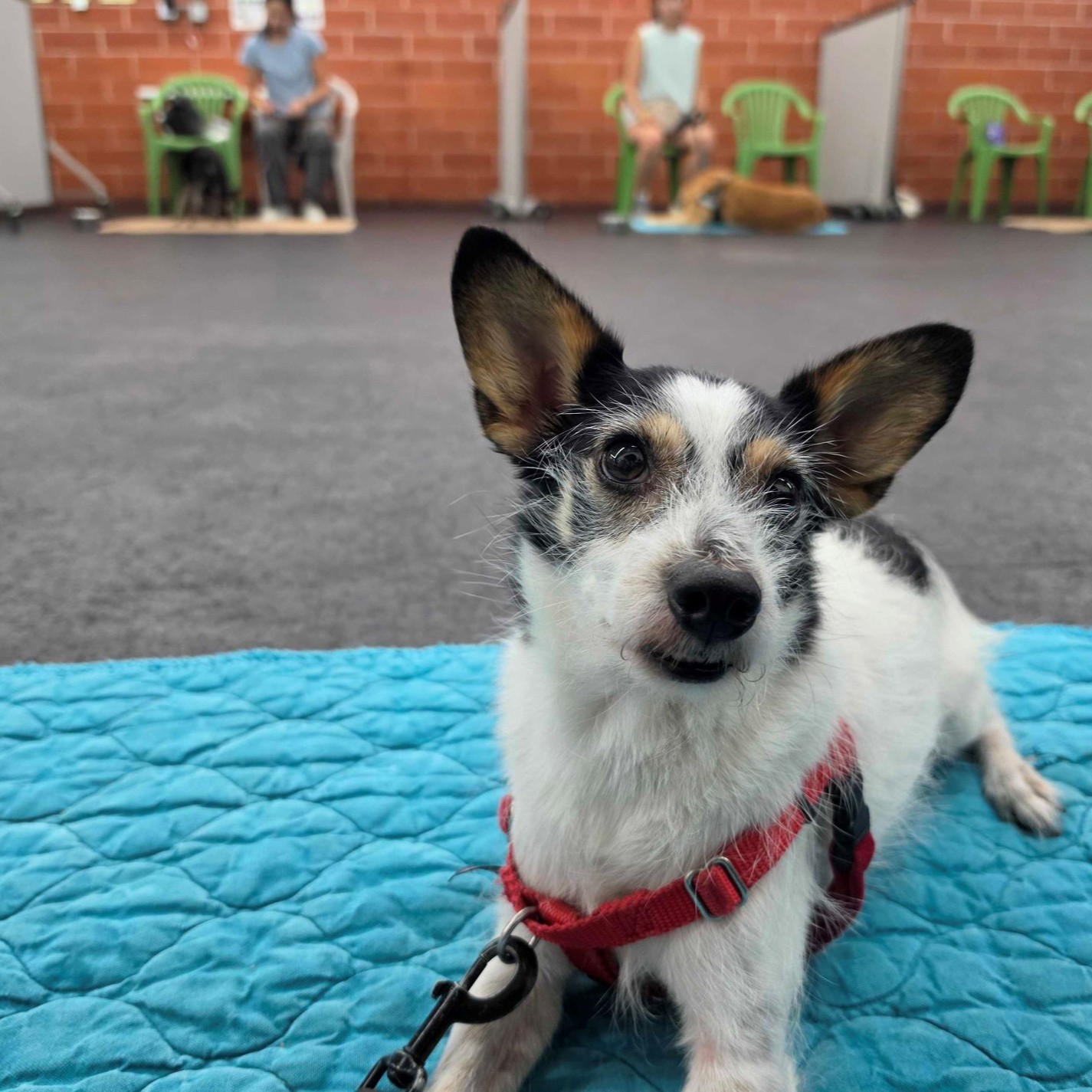
Happy National Mutt Day! If you are one of the thousands of Los Angeles dog owners scrolling through this with a “who-knows-what-she-is” rescue pup curled up next to you, this one is for you. 🐶
Mixed-breed dogs make up a large share of the pups we welcome to our West LA facility. Personally, our training team loves working with them. While purebred dogs offer a predictable set of breed-specific traits, mutts are beautiful, unique genetic puzzles. Solving those puzzles is one of the most rewarding parts of our job.
However, that individuality is also exactly what trips many owners up. When you are training a mixed breed dog, relying on generic breed-standard checklists won’t cut it. To build a truly harmonious relationship, we have to look past simple breed labels and understand the complete picture of who your dog is.
🧭 A Smarter Framework: The L.E.G.S. Model
To understand any dog’s behavior, our facility leans heavily on the L.E.G.S. model, an exceptional framework developed by applied ethologist Kim Brophey. Kim also offers an extensive offering of free materials on her website for families, from a free video course to simple hacks. This system looks at the four distinct elements that dictate why a dog does what they do:
- L (Learning): What has your dog learned works or doesn’t work through their life experiences?
- E (Environment): What is happening in their day-to-day life? (e.g., the sensory differences between a quiet home in Beverly Hills versus a bustling apartment building on Abbot Kinney Blvd).
- G (Genetics): What hardwired behavioral drives, instincts, and genetic predispositions did they inherit?
- S (Self): Who is the individual dog? This covers their age, current physical health, sex, and unique personality.
When you are working with a rescue mutt—especially one whose early history is a complete blank slate—the L.E.G.S. model prevents you from asking, “Why is my dog being stubborn?” Instead, it guides you to ask: “What genetic drives are at play here, and how is their environment triggering them?”
🧬 Why Genetics Matter—Even for Mystery Mixes
It is a common myth that breed instincts do not matter once you have a mixed breed dog. In reality, the opposite is true. A mixed breed dog can carry strong, competing instincts from several different working groups simultaneously.
You might have the herding eye of a Border Collie, the intense prey drive of a terrier, and the sensitive, “velcro” loyalty of a German Shepherd all wrapped up in the same 35-pound body. These hardwired instincts do not simply cancel each other out. If they are not given a safe, structured outlet, they tend to show up “sideways” as problem behaviors like fence-line barking, ankle-nipping, or resource guarding.
Why We Recommend DNA Testing
Disclaimer: As an Amazon Associate, we earn a small commission from qualifying purchases made through the affiliate links below at no extra cost to you.
This is where modern canine genetics can be a game-changer. We often advise clients to run an Embark Dog DNA Test. We don’t recommend this just for the fun percentage breakdown, but because it provides critical behavioral data.
Knowing that your mystery rescue is genetically weighted toward guardian breeds, herding breeds, or scent hounds turns “Why is my dog doing that?” into “Of course my dog is doing that—now let’s give them an appropriate way to satisfy that urge.” If you want to learn more about your dogs behavior in relation to their L.E.G.S., the book Meet Your Dog is a great way to deepen your understanding of your dog.
🛠️ Give the Instinct an Outlet (Don’t Just Suppress It)
Once you understand what genetic ingredients make up your dog, you can pair them with the right behavioral outlets. Layering these appropriate activities on top of your standard obedience routine is often the difference between a dog who is technically compliant and a dog who is genuinely relaxed and fulfilled.
- The Herding / Chase Drive: If your mix has herding roots, that instinct is built around eyeing, chasing, and controlling movement, which is why generic fetch can sometimes overstimulate rather than satisfy it. Left unaddressed, this drive tends to surface sideways, as nipping at ankles, fixating on bikes, or obsessively tracking movement across a room. A flirt pole is a better outlet: it lets your dog practice the natural predatory chase sequence, but inside a structured, rule-bound game that you control from start to finish. Because you set the start, the chase, and the “catch,” the dog gets to burn off that drive without practicing it on joggers or the family cat. A few short sessions a week is often enough to take the edge off. The goal isn’t to erase the instinct — it’s to give it a job that works for both of you. The ultimate would be a trip to a sheep herding session, but we have to work with in what is available and realistic for each family.
- The Scent / Tracking Drive: If there’s hound in the mix, your dog’s world is organized primarily through their nose, not their eyes. Walks that force a straight-line march with no sniffing breaks are frustrating for these dogs in a way that’s easy to underestimate — it’s a bit like asking a highly verbal person to stay silent all day. Structured “sniffari” walks, where you let your dog set the pace and sniff freely, give that drive a legitimate outlet instead of fighting it the whole way around the block. Feeding meals in a snuffle mat works the same instinct indoors, turning dinner into a problem-solving task instead of a thirty-second gulp. Both options tire out the brain, not just the legs, which matters more for scent-driven dogs than extra miles ever will. A well-sniffed dog is often a calmer, more settled dog at home. Nose work classes are also a great option if you enjoy taking classes with your dog. We love the NACSW style of training and their instructors.
- The Guardian / Sentinel Drive: Guardian breeds are wired to track who’s coming and going, which is exactly what makes visitors one of their toughest moments — over-excitement, reactivity, or guarding can all show up the second the doorbell rings. Rather than fighting that instinct head-on, Kim Brophey’s Off-Duty Protocol, taught through the L.E.G.S. Family Dog Mediation curriculum, gives the dog a different job: being “off duty” instead of “on duty.” In practice, that means a secure tethered or gated spot with a comfortable bed and a favorite chew, practiced for a week or two before any guests are ever invited over. By the time a visitor arrives, the dog already has a predictable, rewarding place to settle instead of a decision to make at the door. You’re not asking a guardian breed to stop caring who’s in the house — you’re giving that instinct a clear, low-stakes outlet instead of leaving the dog to sort it out alone. (Reference: FDM Off Duty Handout, Applied Ethology LEGS Family Dog Mediation Course, 2022, as documented by Aggressive Dog)
🎓 Why Socialization in a Managed Setting is Key
Because a mixed breed dog’s genetic history is often a partial mystery, early and ongoing socialization is vital.
While taking your dog to a chaotic, unstructured dog park can trigger fear-reactivity, enrolling them in a structured environment allows them to build confidence safely. In a professional setting, a certified trainer can actively monitor the interactions, ensuring your dog’s unique mix of instincts is guided positively.
If you are ready to build a training plan that respects exactly who your dog is as an individual, our West LA team is here to help.
- Practice real-world manners and controlled socialization alongside other local pet parents in our specialized group dog training classes.
- Set your pup up for rapid progress with customized, one-on-one coaching tailored to your lifestyle through customized private dog training lessons.
- Let our expert handlers guide your dog through personalized behavioral conditioning during the day in our educational dog daycare program.
Let’s turn your mystery mix into the ultimate well-mannered companion.
👉 Book your free 15-minute Discovery Call today or call our local team at 📞 (310) 558-9037 to get started!