

Disclaimer: As an Amazon Associate, we earn a small commission from qualifying purchases made through the affiliate links in this post at no extra cost to you.
September is National Service Dog Month—a full month dedicated to honoring the incredible working dogs who make independent living possible for people with disabilities, as well as the handlers and trainers who work beside them. 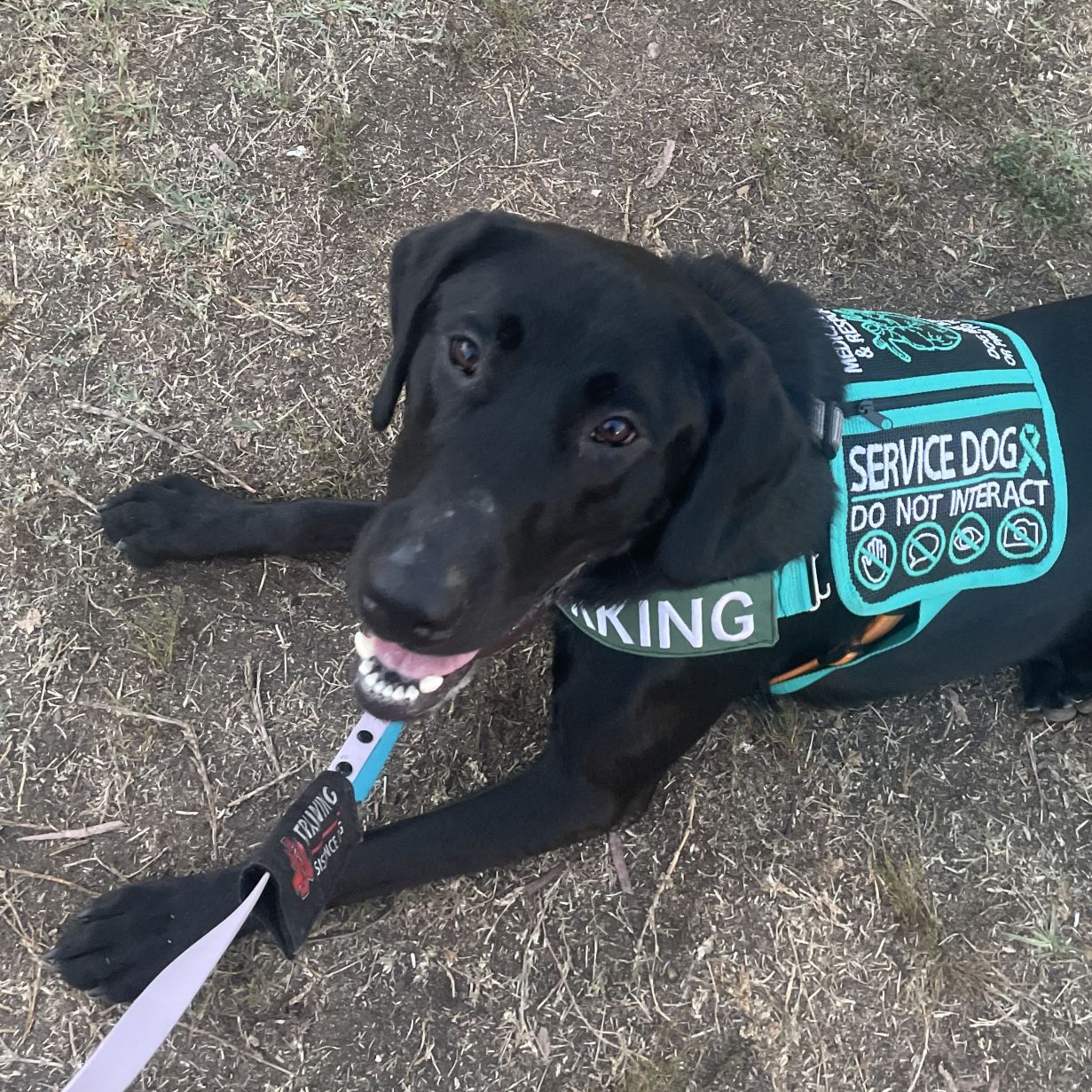
If you have ever wondered what service dog training in Los Angeles actually involves, how long the process takes, or whether training your own working candidate is realistic, you are not alone. Between social media trends, viral videos, and seeing dogs wearing questionable “service vests” in local restaurants, there is a lot of confusion about what true service dog work entails.
Here is a breakdown of what service dogs do, how the training works, and how our West LA team guides handlers through this life-changing journey.
🐕 What a Service Dog Actually Does (And Doesn’t Do)
Under the Americans with Disabilities Act (ADA), a service dog is legally defined as a dog that is individually trained to do work or perform tasks for the benefit of an individual with a disability.
The key distinction is that the task must be specifically trained and directly linked to the handler’s physical, psychiatric, or sensory condition.
To help clarify the differences between working canine roles, we use this simple breakdown during client evaluations:
 What Service Tasks Look Like in Practice
- Psychiatric Support: Providing Deep Pressure Therapy (DPT) on designated pressure points to ground a handler during a panic attack, or turning on lights to disrupt night terrors.
- Mobility Assistance: Opening automatic doors, retrieving dropped keys or phones, or bracing to assist a handler when standing.
- Medical Alert & Response: Responding to pre-seizure movement cues or alerting to sudden changes in blood sugar before a medical crisis occurs.
🎓 How Service Dog Training Works: The 18-to-24 Month Journey
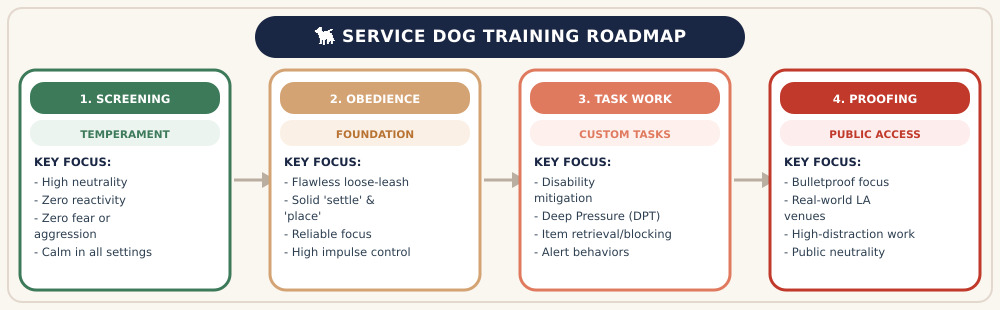
True service dog training is one of the most demanding processes in the canine world. It is not a weekend course or an online certificate—it is an intensive 18 to 24 month commitment that covers four distinct phases:
The Temperament Filter
Not every dog—even a friendly, well-socialized pet—possesses the neurological wiring required for service work. A candidate dog must be completely stable under extreme environmental pressure, unbothered by sudden loud noises or erratic human movements, and entirely free of fear, resource guarding, or reactivity.
Even in purpose-bred guide and service programs, the “wash-out” rate can reach 50% or higher. Identifying candidate viability early saves handlers years of emotional heartbreak and financial strain.
⚖️ Owner-Trained vs. Program-Trained: My Honest Take
In the United States, the ADA allows handlers to train their own service dogs. You are not legally required to purchase a $30,000 pre-trained dog from an accredited institution.
However, when handlers ask me about owner-training during an initial consult, I am always completely direct: Owner-training a service dog is a monumental task.
Trying to owner-train without expert coaching is where many handlers run into roadblocks. Training a dog to perform a task in your quiet living room is vastly different from proofing that same task while walking through a chaotic grocery store or past a barking dog on a narrow sidewalk in Culver City.
Working with a certified professional ensures:
- Accurate temperament testing before you invest time and money into a candidate dog.
- Structured, bite-sized progression that prevents dog burnout or emotional stress.
- Clear documentation of public access benchmarks and task proofing.
🎒 Essential Gear for Working Service Teams
While the ADA does not legally mandate working vests or patches, utilizing professional gear communicates your dog’s working status to the public, preventing unwanted petting and distractions:
- Clear Identification Vests: A breathable, comfortable vest like the Service Dog Vest provides clear patch space for “Do Not Pet” warnings, keeping your dog focused.
- Hands-Free Safety Leashes: For handlers managing mobility devices or psychiatric triggers, a hands-free option like the Hands-Free Leash secures your dog safely to your waist.
- Rapid-Delivery Treat Pouches: Split-second reinforcement is vital during public access proofing. We recommend the magnetic PetSafe Sport Dog Treat Pouch for instant reward delivery.
🌴 Navigating Public Access in Los Angeles
Los Angeles presents a unique testing ground for service dogs. Dense urban environments, high-volume traffic, Metro rides, crowded outdoor dining patios in Venice, and frequent human approach require high environmental neutrality.
Our specialized service dog training program in Los Angeles takes training out of the facility and directly into real-world LA environments. We help handlers build customized training plans using a flexible combination of formats:
- Targeted Handler Coaching: Build individual tasks and handling skills through one-on-one customized private dog training lessons.
- Environmental Neutrality: Practice impulse control and focus around other dogs during the week in our educational dog daycare program.
- Immersive Reset Work: Address foundational public access proofing inside a controlled environment through our Boarding School Honors track.
🗓️ Ready to Explore the Right Path?
If you or a family member believe a service dog could significantly improve your daily independence, the first step is an honest, professional conversation about your goals, your candidate dog’s temperament, and your training timeline.
At I Said Sit!, we have been guiding West LA pet parents and working teams using humane, science-backed methods since 1988.
Let’s discuss your situation and evaluate the best next step for your family.
👉 Book your free 15-minute Discovery Call today or call our team directly at 📞 (310) 558-9037 to get started!