Disclaimer: As an Amazon Associate, we earn a small commission from qualifying purchases made through the affiliate links in this post at no extra cost to you.
Your dog has always been a gentle companion. Then, out of nowhere, they growled when you touched their collar, snapped at a family member near the couch, or lunged at another pup on your usual walk in Culver City.
If you are sitting with that terrifying moment right now—feeling confused, heartbroken, or anxious about what this means for your family—take a deep, slow breath.
First and most importantly: You are not a bad owner, and this does not mean your dog is “broken.”
When faced with sudden dog aggression, it is easy to assume your dog’s core personality has changed overnight. In reality, aggression is almost never truly random. It is an outward symptom of an inward issue, and understanding why it happens is the key to safely fixing it.
🩺 Step 1: Rule Out Hidden Medical Pain (Non-Negotiable)
Before scheduling a behavior consultation or analyzing training techniques, your very first call must be to your veterinarian.
When a dog’s behavior shifts dramatically overnight, medical pain or illness is the primary culprit in over 70% of cases. Dogs are masters at hiding physical discomfort. By the time they growl or snap, they may have been quietly enduring significant pain for weeks.
Common medical causes of sudden behavioral changes include:
- Joint & Musculoskeletal Pain: Early arthritis, hip dysplasia, or torn cruciate ligaments.
- Dental Disease: Fractured teeth or infected gums that make head-touching painful.
- Ear Infections: Deep, painful canal infections that trigger a bite reaction when petted near the neck or head.
- Endocrine Imbalances: Hypothyroidism or neurological shifts that alter mood regulation.
If your dog is reacting out of physical pain, no amount of positive reinforcement or behavioral training will solve the issue until the medical condition is treated.
🔍 Aggression Doesn’t Come From Nowhere
Once your vet clears your dog of medical issues, the focus shifts to behavioral communication.
Dogs rarely bite without warning. They communicate discomfort through a subtle sequence of body language—a stiffened spine, a hard stare, a lowered head, lip-licking, or yawning. When human handlers miss these early “whispers,” the dog feels forced to “shout” by growling, snapping, or biting.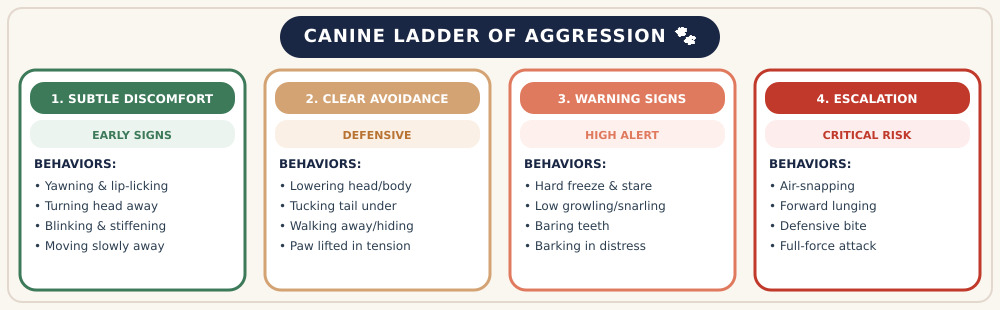
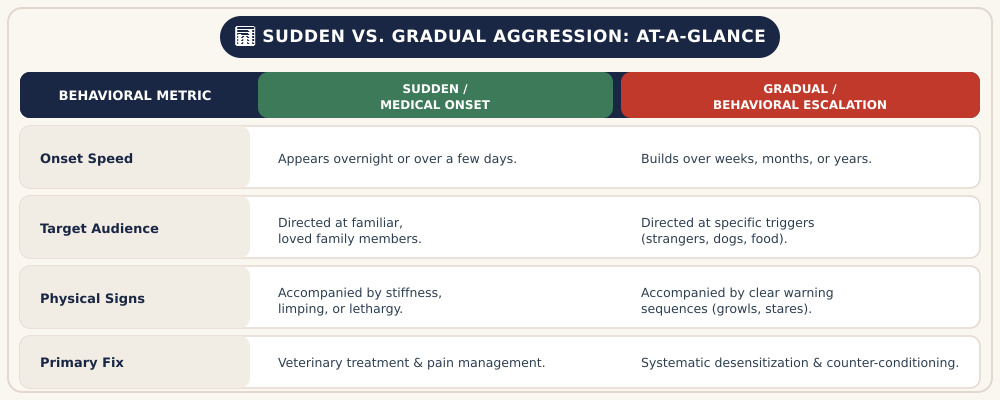
Elisha recently spoke with Care.com regarding this exact behavioral pattern, explaining how a dog reacting to something it has always tolerated before is often showing sudden pain or threshold depletion, whereas a dog whose reaction keeps intensifying over time is exhibiting a gradual behavioral pattern. You can read the full feature, What to do if your dog is suddenly aggressive, for more insight on telling the two apart.
📊 Sudden vs. Gradual Aggression: At-A-Glance
🛑 What Doesn’t Work (And Makes Aggression Worse)
When facing an aggressive outburst, well-meaning pet parents in Santa Monica or Venice often resort to methods that backfire:
- ❌ Punishing the Growl: Scolding or correcting a dog for growling does not remove their fear or discomfort. It simply teaches them that growling is dangerous. The next time they feel overwhelmed, they may skip the growl entirely and go straight to a bite.
- ❌ Physical Corrections: Using choke chains, prong collars, or physical intimidation on an anxious dog spikes their cortisol levels, forcing them into a “fight-or-flight” response that actively triggers defensive bites.
- ❌ Total Avoidance: Managing around the trigger forever (like never having guests over) prevents incidents in the short term, but leaves the underlying fear completely unaddressed.
🛍️ Safety First: Essential Management Tools
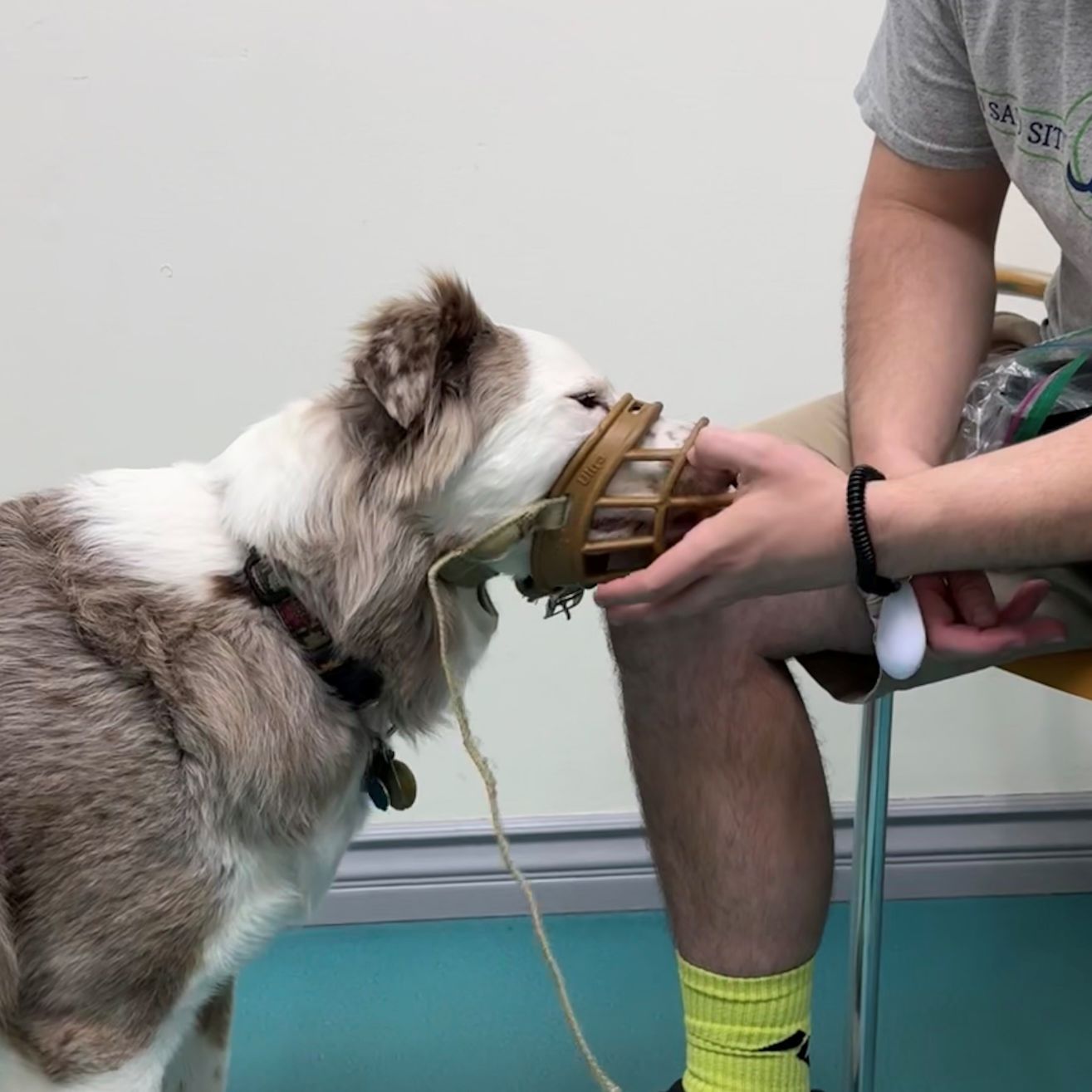
While working with your vet and a professional trainer, safety is your top priority. Utilizing humane management gear protects everyone without adding fear:
- Basket Muzzle for Safety: Basket muzzles allow a dog to pant, drink water, and take treats comfortably while ensuring absolute safety during vet exams or walks. We recommend the Baskerville Ultra Muzzle when paired with positive, reward-based muzzle conditioning.
- Fixed Training Leashes: Avoid retractable leashes, which offer zero control during an outburst. Switch to a heavy-duty, fixed 6-foot Biothane Training Leash for secure handling.
🤝 How We Safely Guide You Through Aggression
Once medical causes are addressed, behavioral modification is about identifying exact environmental triggers, keeping your dog below their panic threshold, and rebuilding mutual trust.
At I Said Sit!, our certified trainers have been helping Los Angeles families safely navigate reactivity and aggression since 1998. We never use fear or force, and we give you an honest, transparent assessment of your dog’s timeline:
- In-Home Guidance: For situational aggression involving home triggers, food guarding, or family interactions, our in home private dog training lessons allow us to build a custom safety and management plan directly in your living environment.
- Controlled Immersive Therapy: For dogs needing daily, highly structured behavioral modification overseen by expert handlers, look into our specialized Boarding School Honors program inside our West LA facility.
You Don’t Have to Navigate This Alone
Experiencing an aggressive moment with your dog is overwhelming, but early intervention changes everything. Reaching out for professional help is the most responsible, loving choice you can make for your pet.
We are here to evaluate your dog candidly, protect your family’s safety, and map out a realistic path forward.
👉 Book your free 15-minute Discovery Call today or call our local West LA team directly at (310) 558-9037 to speak with a specialist!