

Disclaimer: As an Amazon Associate, we earn a small commission from qualifying purchases made through the affiliate links in this post at no extra cost to you.
You step out into the backyard with your morning coffee, only to discover it looks like a small construction crew worked an overnight shift in your lawn. There are deep craters near the fence, a trench along the flower bed, and a very pleased dog sitting in the middle of it all, covered head-to-toe in mud.
If you are frantically searching for how to stop dog digging, take a deep breath first.
Your dog isn’t digging out of spite, malice, or to ruin your weekend garden project. Digging is a natural, self-rewarding canine instinct, and it is very fixable once you understand what the digging is accomplishing for them.
⛏️ Why Dogs Dig (Hint: It’s Not Spite)
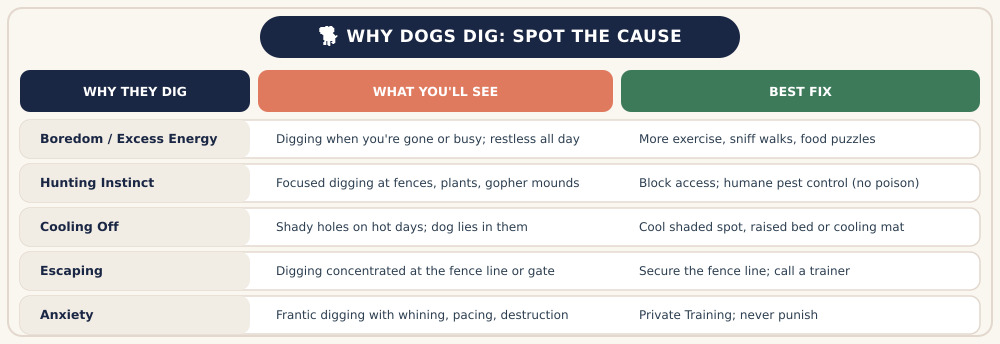
Digging satisfies deep innate instincts: dogs dig to hunt prey, bury high-value items, cool off from the heat, build a cozy nesting spot, escape confinement, or simply because shredding dirt feels fantastic.
Certain breeds—especially Terriers, Dachshunds, Huskies, Malamutes, Australian Shepherds, and many working mixes—have digging literally hardcoded into their DNA. For them, excavating dirt is practically a job description.
Here in Los Angeles, local environmental factors multiply the urge:
- Underground Prey: Backyards across Culver City, Santa Monica, Mar Vista, and the San Fernando Valley are full of gophers, moles, and squirrels running along the fence line.
- October Heat: On warm Southern California afternoons, digging down past the dry topsoil reaches cool, damp dirt underneath.
- Boredom: An energetic dog left alone in a yard without mental enrichment will invent their own entertainment—and dirt is the ultimate interactive toy!
🛑 What Doesn’t Work (And Why Punishment Backfires)
When owners see a freshly ruined garden, their instinct is often to react emotionally. However, common punishments actively ruin your training progress:
- ❌ Yelling After the Fact: Dragging your dog over to a hole hours after it was dug and shouting “Look what you did!” teaches them absolutely nothing about digging. Your dog simply learns that you are unpredictable and scary when you stand near dirt.
- ❌ Creating “Secret Diggers”: Punishment rarely stops the desire to dig—it just teaches your dog not to dig while you are watching. The second you leave for work, the digging resumes.
- ❌ Compounding Anxiety: If your dog is digging near the fence because of separation distress or fear of neighbor dogs, scolding adds more stress to an already struggling dog.
- ❌ Filling Holes Without a Plan: Merely refilling holes with dirt and hoping for the best fails every time, because the underlying drive behind the behavior remains unaddressed.
At I Said Sit!, our entire philosophy centers on humane, positive reinforcement training methods. We teach dogs what to do instead of relying on fear or physical intimidation.
🛠️ A Step-by-Step Plan to Stop Dog Digging
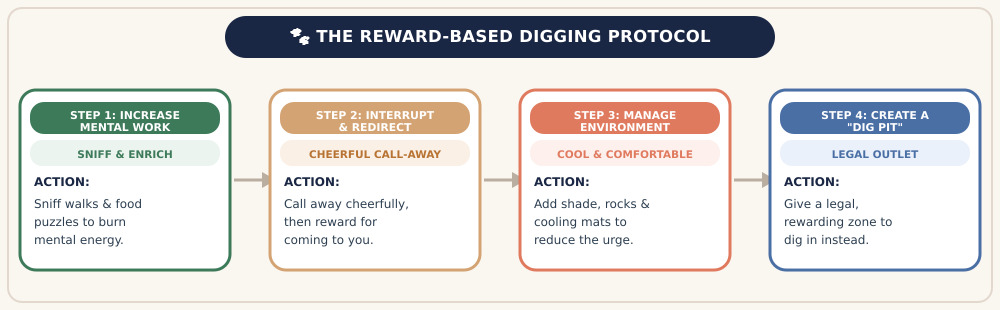
To solve digging long-term, you must address the root cause while managing the environment:
1. Increase Daily Mental Enrichment
A mentally satisfied, physically tired dog digs significantly less. Swap standard bowl feeding for scatter-feeding kibble across your lawn, or use interactive brain games. A 15-minute sniff-heavy walk burns more mental energy than a frantic 30-minute fetch session!
2. Supervise & Interrupt Gently
When you catch your dog actively starting a hole, do not yell. Call them cheerfully away using a high-value recall cue, celebrate their arrival, and immediately redirect them to an interactive toy or a game of tug. You are teaching them that disengaging from the dirt pays off!
3. Manage the Environment
Block access to favored digging zones using decorative landscaping rocks or temporary garden fencing. If your dog digs to cool off, install an elevated mesh dog bed or provide a shaded, cool resting area.
4. Deal with Pest Issues Humanely
If gophers or moles are triggering hunting instincts along your fence line, work with a professional pest control service. Never use chemical poisons or rodent bait in a yard with pets—secondary ingestion is deadly to dogs.
🏖️ Give Digging a “Legal Outlet” (The Dig Pit Solution)
For high-drive working breeds and terriers, attempting to completely extinguish digging is like fighting gravity. The most effective approach is giving them a designated legal digging zone.
How to Build a Designated Dig Pit
- Choose a Location: Pick a small, shaded corner of your yard.
- Set Up the Pit: Use a wooden sandbox frame or a shallow plastic kiddie pool filled with loose, clean play sand or soft soil.
- Seed the Pit with Treasures: Lightly bury high-value rubber chew toys, durable balls, or sealed bully sticks just below the surface while your dog watches.
- Encourage & Reward: Show your dog the pit and encourage them to explore. When they dig up a toy, celebrate enthusiastically!
- Redirect Daily: If they attempt to dig near your rose bushes, calmly guide them to their dig pit and reward them for digging there instead.
🛋️ Apartment Dogs “Dig” Too!
Many of our West LA clients live in apartments and condos across Santa Monica, Venice, Palms, and West Adams, where there isn’t a blade of grass in sight. Yet, their dogs still frantically “dig” on couches, blankets, and dog beds!
Apartment digging stems from the exact same instincts: nesting, excess energy, or seeking comfort. You can solve indoor digging by providing indoor outlets:
- Snuffle Mats: Hide dry kibble inside a fabric mat to satisfy foraging urges.
- Digging Blankets: Dedicate two old fleece blankets in a pile specifically for your dog to nest and dig through.
- Structured Daytime Care: Enrolling in our educational dog daycare program gives high-energy apartment dogs structured social play, rest rotations, and mental engagement while you are at work.
🛍️ Recommended Tools for Diggers & Foragers
Providing healthy mental outlets is essential for stopping unwanted yard excavation:
- 🧩 Interactive Food Puzzles: Keep your dog’s brain working indoors with the Nina Ottosson Outward Hound Dog Brick Puzzle.
- 🛏️ Elevated Outdoor Cooling Bed: Keep your dog cool outside without digging holes using the breathable Elevated Cooling Dog Bed.
- 🧠 Indoor Foraging Snuffle Mat: Satisfy natural foraging instincts inside your home with the Pet Snuffle Mat.
⏱️ How Long Does It Take to Stop Dog Digging?
We believe in being 100% realistic with our clients: this is rarely an overnight fix.
- Boredom or Heat Digging: When you increase exercise, provide shade, and implement daily mental enrichment, you will typically see dramatic improvement within 2 to 3 weeks.
- Hunting or Instinctive Digging: Terriers hunting gophers or dogs with years of entrenched digging habits require a few extra weeks of consistent supervision and environmental management. Expect steady progress rather than instant perfection!
🗓️ When to Seek Professional Guidance
You should consult a certified professional trainer immediately if:
- Your dog is digging frantically along fence lines to escape (a major safety risk).
- Digging is accompanied by panic, drooling, vocalizing, or door destruction when left alone (signs of separation distress).
- Your dog exhibits extreme resource guarding around holes or buried items.
Our customized private dog training lessons allow us to evaluate your yard, observe your dog’s behavior, and build a tailored plan for your home. For dogs needing better impulse control around distractions, our group dog training classes provide a fantastic environment to practice focus.
At I Said Sit!, we have been helping Los Angeles pet parents solve everyday behavioral challenges like digging since 1988.
Let’s find out why your dog is digging and build a plan that protects your yard while keeping your pup happy!
👉 Book your free 15-minute Discovery Call today or give our West LA team a call directly at 📞 (310) 558-9037!