Disclaimer: As an Amazon Associate, we earn a small commission from qualifying purchases made through the affiliate links in this post at no extra cost to you.
You say, “Come!”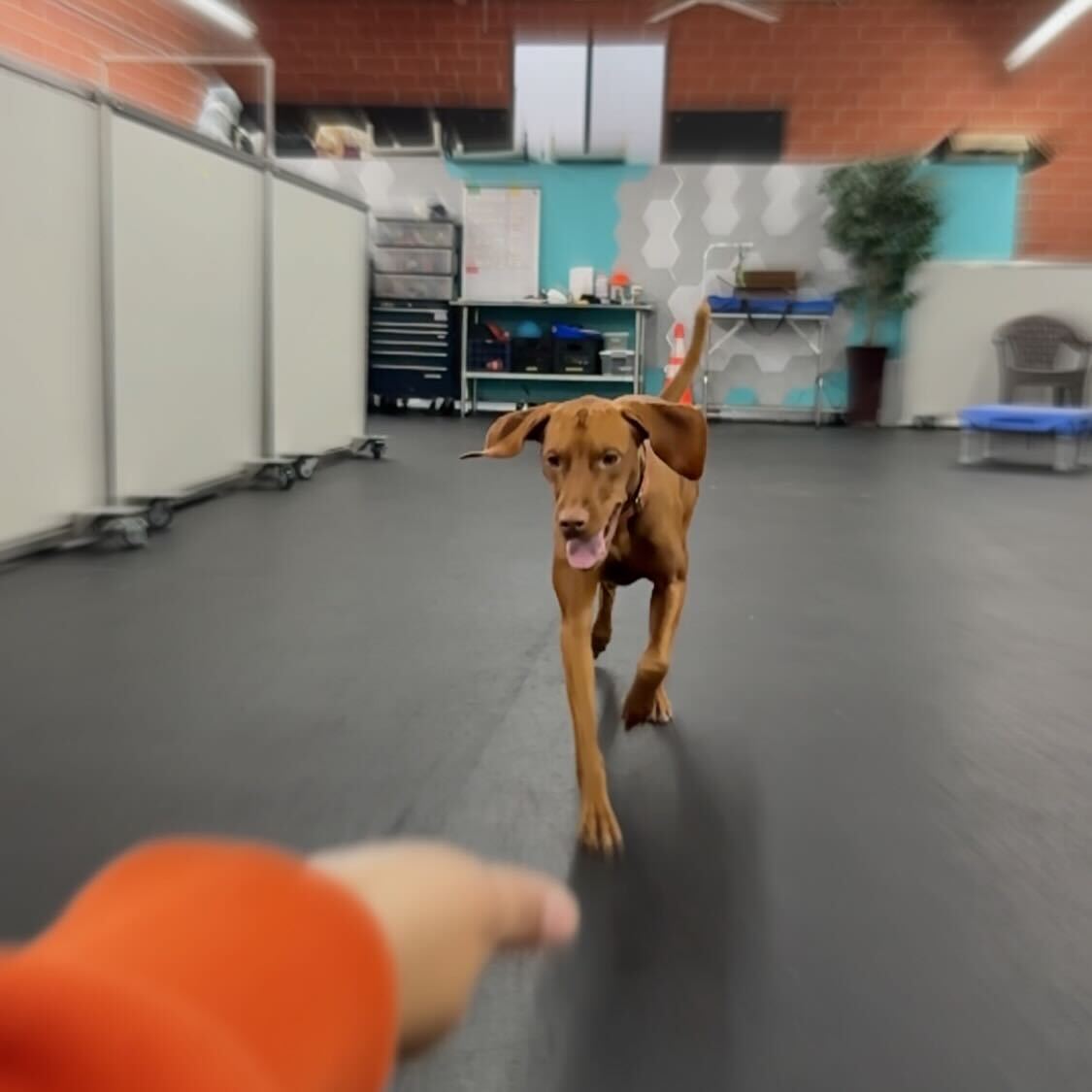
Your pup looks at you, makes direct eye contact, and then trots in the exact opposite direction. Or worse—they don’t even bother to look up from the patch of grass they are sniffing.
If your dog won’t come when called, take a deep breath. You aren’t dealing with a spiteful or “stubborn” dog. You are dealing with a recall cue that has simply lost its value.
In Los Angeles, a broken recall isn’t just an inconvenience—it’s a critical safety issue. Here is why the command breaks down, what not to do, and how to build a reliable recall from scratch using humane, science-backed methods.
🚫 Why “Come” Breaks Down
Recall is the single most important behavior you can teach your dog, yet it is usually trained the most casually. When a recall breaks down, it is almost always due to one of three reasons:
1. Poisoning the Cue (Fun Is Over)
In the early days, calling your dog over resulted in belly rubs or treats. But over time, owners accidentally turn the word “Come!” into a predictor of bad news:
- “Come!” means leaving the dog park.
- “Come!” means getting a bath or nail trim.
- “Come!” means being put in the crate while you go to work.
Your dog isn’t being stubborn; they are making a logical calculation based on past experience. When “Come!” consistently ends the fun, they learn to ignore it.
2. The “Nagging” Effect
Saying “Come, come, COME!” over and over again while your dog ignores you turns your voice into background noise. Dogs don’t generalize language well; they learn that the first four times you say the word, nothing happens, so they don’t need to respond until you’re shouting.
3. Competing With LA Distractions
Calling an untrained dog away from a squirrel at the Culver City steps or a rowdy playmate at a beach park in Santa Monica is like offering someone a nickel when they are holding a $100 bill. If the reward for coming to you doesn’t outweigh the distraction, the distraction wins.
🛑 What NOT to Do When Training Recall
When owners feel frustrated by a dog that ignores them, they often fall into traps that actively ruin their training:
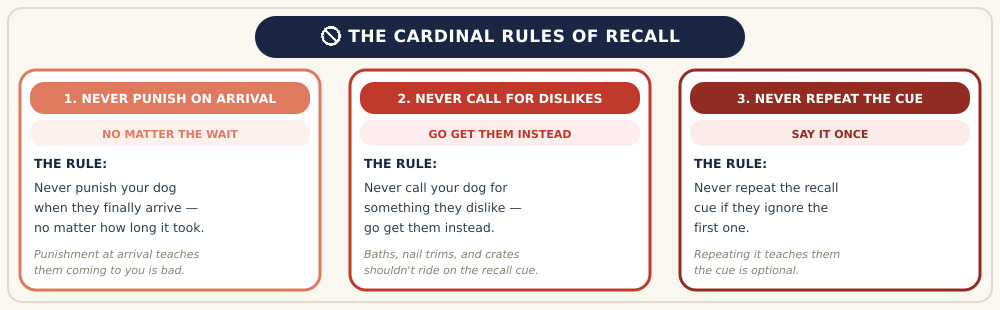
- ❌ Never Punish the Arrival: If your dog takes off, ignores you for five agonizing minutes, and finally trots back to you, scolding them guarantees they won’t come back next time. From the dog’s perspective, they are being punished for returning to you.
- ❌ Don’t Call Them When You Know They’ll Fail: If your pup is in a high-arousal game of chase at an off-leash park, calling them without the proper foundation just rehearses an ignored recall. Instead of calling, walk over and calmly clip on their leash.
🛠️ How to Rebuild a Bulletproof Recall
If your current recall word is burnt out, toss it in the trash and start fresh with a new cue, like “Here!” or “Touch!”
1. Pay “Jackpot” Rewards
When your dog responds to your new recall cue, pay them generously! Don’t just offer a piece of dry kibble. Deliver a “jackpot”—30 seconds of high-value liver treats, pureed meat, or an intense game of tug. You are building a massive bank account of positive associations.
2. Use a Long Training Line
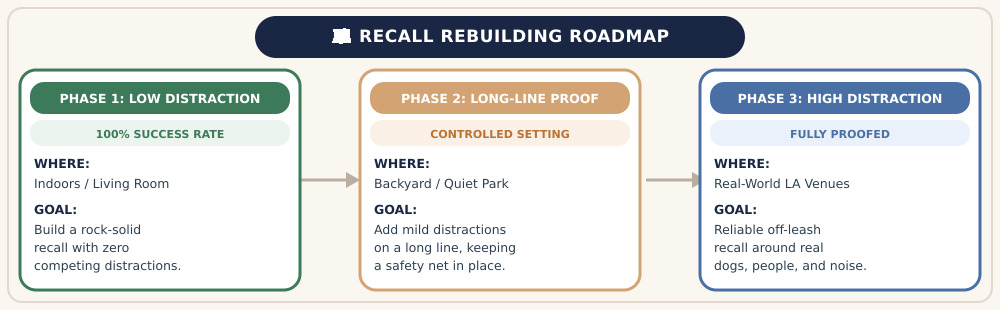
Never give an unproofed dog full freedom in open spaces. Use a 20-to-30-foot long leash in parks or yards. If you call your dog and they hesitate, you can gently guide the line to help them succeed without shouting or chasing.
3. Practice “Ping-Pong” Recalls
Make recall a game! Have two family members sit on opposite sides of the living room with high-value treats. Take turns calling the dog back and forth, rewarding them enthusiastically every time they arrive.
🛍️ Essential Gear for Recall Success
Building a reliable recall requires the right management tools to keep your dog safe while practicing in public spaces:
- Long Training Leash: A lightweight, weatherproof option like the Biothane Long Line allows you to practice distance recalls outdoors while maintaining complete physical control.
- Rapid-Access Reward Pouch: Timing is everything. Keep your high-value “jackpot” treats right at your hip using a magnetic Dog Treat Pouch.
- High-Value Training Treats: Reserve soft, ultra-smelly treats like Zuke’s Mini Naturals Dog Treats exclusively for recall work so the reward stays exciting.
⛰️ LA Safety: Why Recall Matters Here
Living in Southern California presents unique environmental hazards where an emergency recall can save your dog’s life:
- Coyote Encounters: Coyotes are increasingly common across Franklin Hills, Griffith Park, and the Westside. If a coyote appears on a trail, a rapid recall keeps your dog from giving chase.
- Traffic Hazards: Busy thoroughfares like Pico, Wilshire, and Sepulveda leave zero room for error if a dog slips their collar or bolts through an open gate.
- Trail Hazards: Rattlesnakes and steep drop-offs on local hiking trails require an instant, off-leash response.
🗓️ How We Build Off-Leash Reliability
If your dog’s recall has completely broken down, trying to fix it alone in high-distraction LA environments can feel overwhelming.
At I Said Sit!, our certified trainers have been helping local dog owners build reliable, reward-based recall since 1996:
- One-on-One Customization: Work through specific distraction levels in your own neighborhood with our customized private dog training lessons.
- Distraction Proofing: Practice recall around other dogs in a safe, controlled setting through our specialized group training classes.
- Immersive Off-Leash Mastery: For dogs that need daily, high-repetition work with expert handlers, explore our immersive Boarding School Honors program.
Don’t wait for a close call to fix your dog’s recall.
👉 Book your free 15-minute Discovery Call today or call our West LA team directly at 📞 (310) 558-9037 to build a rock-solid recall plan!