Disclaimer: As an Amazon Associate, we earn a small commission from qualifying purchases made through the affiliate links in this post at no extra cost to you.
It is 2:15 AM. Your brand-new puppy is letting out a mournful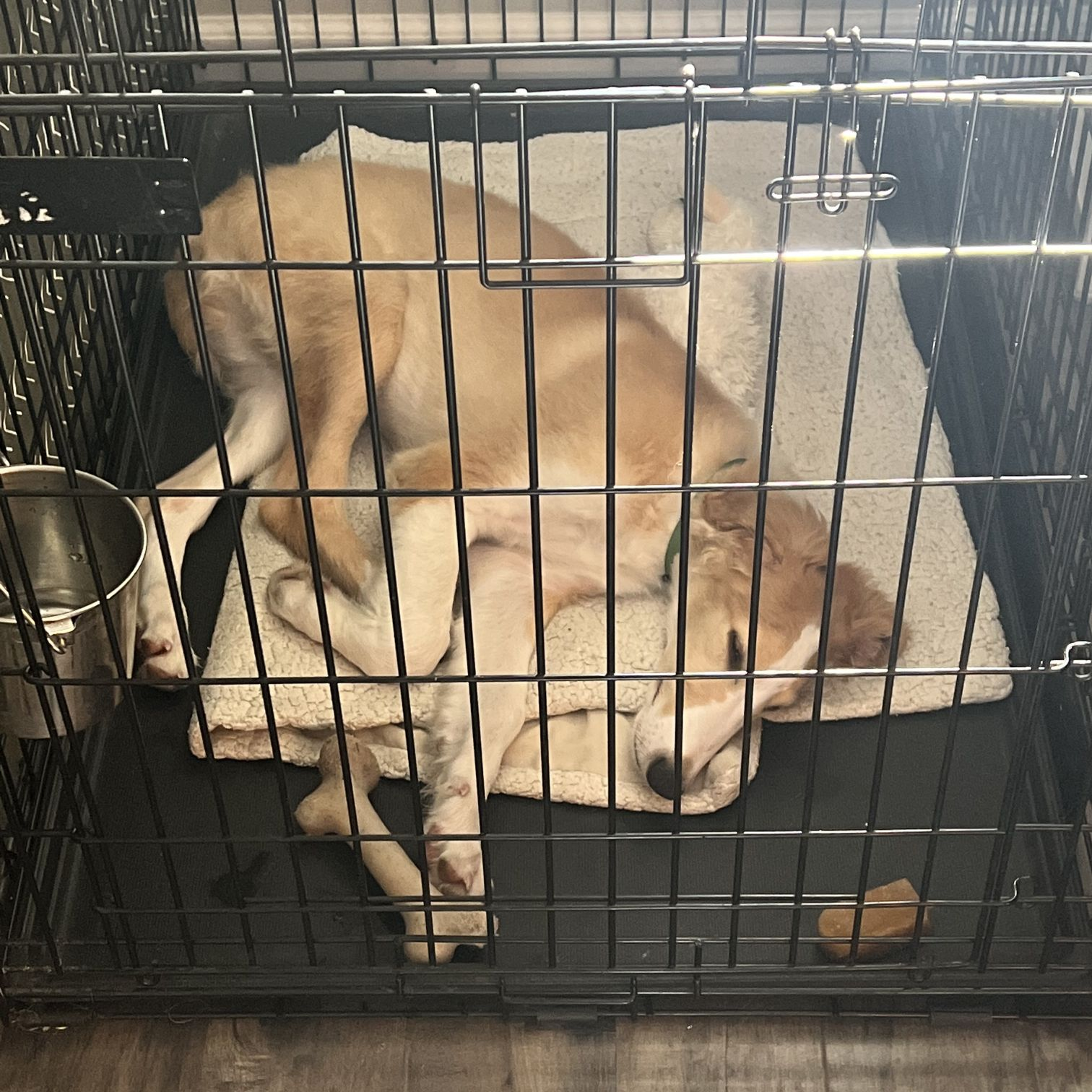 , heart-wrenching whimper from inside their crate, and you are lying awake staring at the ceiling, feeling like the most heartless human being on the planet.
Every protective instinct in your body screams at you to jump out of bed, swing the crate door open, and bring that tiny warm ball of fluff into bed with you.
If this scenario sounds painfully familiar, you are in good company. Almost every dog parent who walks through the doors at I Said Sit! experiences some version of “crate guilt.”
Here is the truth after 16 years on our West LA training floor (and 38 years as a facility): crate training a dog without guilt is 100% possible. A properly introduced crate is never a cage or a punishment—it is a secure, cozy bedroom where your pup can decompress, sleep soundly, and feel protected from the chaotic human world.
🐶 Why Crate Training Is Truly Worth the Effort
When done humanely, a crate provides enormous benefits for both dog and human:
-
Accelerates House-Training: Dogs instinctively avoid soiling their sleeping area, which helps young bladders develop natural bowel control.
-
Puppy Proofing & Safety: When you cannot supervise 100% of the time, the crate keeps curious pups from chewing electrical cords, swallowing socks, or ingesting toxins.
-
Low-Stress Vet Visits & Travel: In Southern California, emergencies happen (from wildfires to road trips). A dog comfortable inside a crate travels calmly and handles veterinary boarding without terrifying stress.
-
Enforced Rest: Overstimulated puppies rarely choose to nap on their own. A crate provides a dark, sensory-neutral zone where an overtired brain can finally sleep.
Timing is critical. A puppy’s developmental socialization window closes around 16 weeks. Conditioning the crate during this early window creates positive associations that last a lifetime.
🛋️ My Crate Setup Philosophy: Choosing the Right Den
In compact Los Angeles apartments—whether in Santa Monica, Venice, or Mar Vista—space is premium, but proper setup makes all the difference:
-
The Size Rule: Your dog must be able to stand up without hunching, turn in a complete circle, and lie down stretched out on their side. Anything bigger gives them room to use one corner as an indoor bathroom!
-
Use a Divider Panel: For growing puppies, buy a crate sized for their adult weight that comes with an adjustable wire divider panel. Move the divider back as your pup grows.
-
Strategic Placement: During the day, place the crate in a central family area (like the living room) so your dog feels included. At night, keep the crate right next to your bed. Puppies are pack animals; smelling your scent nearby prevents the primal fear of abandonment.
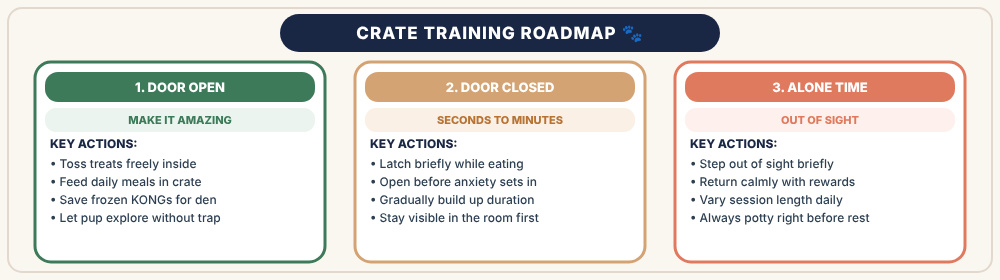
🛠️ The 3-Step Crate Training Roadmap
At [I Said Sit!], our positive reinforcement methods ensure the crate never becomes a trap.
Step 1: Door Open — Make It Amazing
Never shove a dog into a crate and slam the door. Prop the door wide open. Scatter high-value treats inside, feed their daily meals right at the entrance, and save special chews exclusively for the den. Your dog should think: “Hey, the crate is where the best stuff on earth lives!”
Step 2: Door Closed — Seconds to Minutes
Once your dog enters voluntarily, gently latch the door while they enjoy a frozen chew toy. Unlatch and open the door before they finish or become concerned. Gradually build duration: 30 seconds, 2 minutes, 5 minutes. Remain visible in the room so they feel supported.
Step 3: Build Up Alone Time
Once your pup rests calmly with you nearby, practice stepping out of the room for brief intervals. Always return calmly without fanfare, unlatch the door, and reward calm pauses. Vary the duration so crate time doesn’t always predict your departure.
🌙 How to Handle Nighttime Crying (Distress vs. Demand)
One of the most frequent questions we get is: “Do I let my puppy cry it out?”
My trainer answer: Never let a puppy cry it out in panic or terror.
There is a huge distinction between emotional distress and demand barking:
-
True Distress / Fear: Panting, drooling, frantic clawing at the wire, or continuous shrieking. If this happens, your training progressed too quickly! Step back, console your puppy, and reset at an easier step.
-
Demand Barking / Testing Limits: A few soft grumbles or intermittent whines protesting bedtime. For demand whining, wait for 3 to 5 seconds of complete quiet before opening the door or acknowledging them. This teaches them that calm silence—not vocal fussing—opens doors.
The Midnight Potty Protocol
Young puppies have small bladders and cannot physically hold urine all night. Expect 1 or 2 midnight potty breaks. When you take them out at night:
-
Keep lights dim and leave toys alone.
-
No baby talk or playtime.
-
Carry them directly on-leash to their potty spot, wait 2 minutes, reward a successful elimination quietly, and place them straight back in the crate. Midnight trips are strictly business!
🛍️ Essential Gear for Crate Training Success
Equipping your home with the right den tools sets your puppy up for restful sleep:
-
🏠 Adjustable Wire Crate: A double-door folding crate with a divider like the MidWest Homes for Pets adapts as your puppy grows.
-
💤 Calming Crate Bed: Provide orthopedic joint support with a washable MidWest QuietTime Fleece Crate Mat.
-
🧸 Heartbeat Crate Toy: Help young puppies sleep through the night by placing a soothing Original Snuggle Puppy Behavioral Aid Toy inside their crate.
-
🥩 Long-Lasting Enrichment Toy: Keep teeth occupied while the door is closed with a durable Topl Dog Toy filled with frozen peanut butter.
⏱️ How Long Is Too Long?
Crates are designed for restorative rest and safety, not for long-term storage while you are away at work.
A general rule of thumb for puppy bladder control: their age in months = the maximum hours they can comfortably hold their bladder (e.g., a 3-month-old pup can manage roughly 3 hours). Adult dogs should never be crated for full working days without a midday break.
If your daily commute or work schedule makes regular midday breaks difficult, our educational puppy daycare program offers the perfect balance: structured daytime play, supervised socialization, and guided crate rest rotations led by certified handlers.
🗓️ Ready to Build a Crate Routine You Can Feel Good About?
Crate training shouldn’t bring tears, midnight guilt, or buyer’s remorse. When approached with patience and positive reinforcement, the crate quickly becomes your dog’s favorite bedroom in the house.
Whether you need personalized hands-on guidance through private puppy training lessons, early socialization in our group puppy classes, or daytime support in our educational daycare, our West LA team is here to help.
At I Said Sit!, we have been helping Los Angeles pet parents raise calm, confident companions since 1988.
👉 Book your free 15-minute Discovery Call today or give our team a call directly at 📞 (310) 558-9037 to get your crate routine on the right track!