
You just brought home a precious 8-week-old puppy. They are soft, sweet, and smell like baby powder. They are also a tiny, furry land shark whose primary goal in life appears to be launching their razor-blade teeth directly at your hands, wrists, ankles, and designer jeans. 🦈
If your arms are covered in little red scratches and you’re quietly asking yourself, “Did I adopt a aggressive dog?”—take a deep breath.
Puppy biting is completely normal. However, leaving it unchecked during your puppy’s early development is a fast track to a 60-pound adult dog with zero mouth control. Here is why puppies mouth, why traditional advice often fails, and how to stop puppy biting using proven, reward-based methods.
🦈 Why Puppies Bite (And Why LA City Life Amplifies It)
In a puppy’s early weeks, biting is how they explore their world, play, and communicate. Before leaving their mother and littermates, biting was how they learned bite inhibition, if a puppy bit a sibling too hard, the sibling would yelp, stop playing, and walk away. The puppy quickly realized: Hard bite = game over.
When you bring a puppy home to Los Angeles, that learning process must continue in your living room.
Furthermore, city living adds extra fuel to the fire. Navigating apartment hallways in Culver City, riding elevators, hearing sirens on Wilshire, or meeting dozens of new people at outdoor cafes in Santa Monica can easily overstimulate a young puppy. When a puppy’s brain gets overstimulated, their impulse control drops to zero, and their mouth goes into overdrive.
🛑 The “Yelping” Myth (And Other Approaches That Backfire)
If you have searched online for how to stop puppy biting, you have probably read advice telling you to make a high-pitched “Ouch!” or yelp like a puppy when your dog mouths you.
While this technique works for a small percentage of timid pups, in my 16+ years on the training floor at I Said Sit!, yelping backfires for about 90% of puppies.
For high-drive, excited, or bold puppies, a high-pitched “Yelp!” doesn’t mean “Stop, that hurts.” To them, you just sounded like a squeaky toy! It amps up their arousal, turns you into a giant interactive toy, and causes them to bite harder and faster.
Other methods to avoid entirely include:
- ❌ Holding the mouth shut or scruffing: Physically grabbing a puppy’s muzzle creates hand-shyness, fear, and defensive reactivity around human hands.
- ❌ Scolding or physical corrections: Yelling “No!” or tapping a puppy on the nose damages the bond you are trying to build during their critical socialization window and teaches them that hands bring discomfort.
🐾 Real Client Spotlight: Rocky the Lab mix “Land Shark”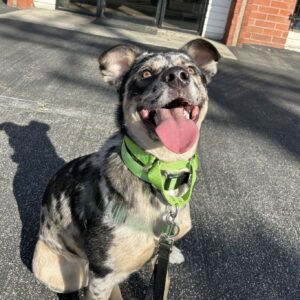
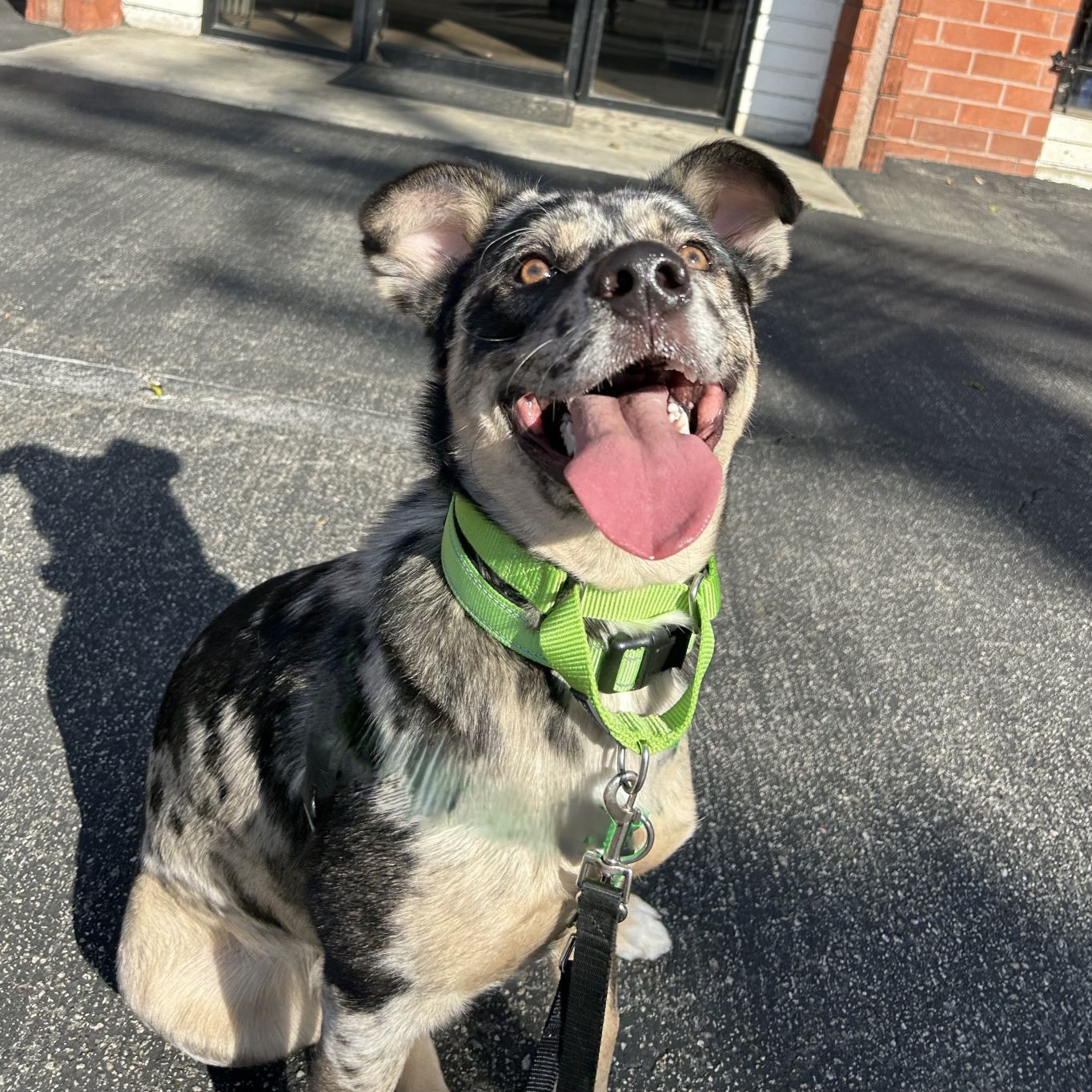
We see puppy mouthing on our West LA training floor every single week. Sometime we get little Land Sharks that need some extra help. Rocky was one of them..
🐕🦺 From Mayhem to Managed Chaos
When Rocky’s owner brought him to our facility she was fed up with his extreme mouthy behavior. Every time she sat near him, Rocky would rough play and bite her arms and ankles. She had tried yelping “Ouch!”, which only caused him to bark and bite harder.
The turning point came when we overhauled the strategy. We ditched the yelping, instituted immediate toy redirection, taught his owner how to practice impulse control, and enforce calm settled moments. During his board and train, Rocky’s mouthiness plummeted, and his owner could finally enjoy playtime without bruises.
🛠️ How to Stop Puppy Biting: The Step-by-Step Action Plan
To reliably stop puppy mouthing, you must teach your puppy what to do with their mouth rather than just telling them “No.”
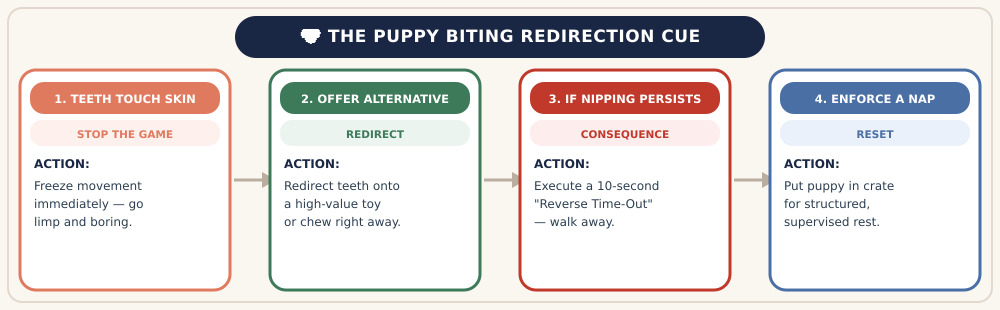
1. Instant Toy Redirection
Keep soft toys, chew ropes, or rubber rings in every room of your house and in your pockets. The split second your puppy’s teeth touch your skin, clothes, or shoes, smoothly slide a toy into their mouth. You are teaching them a clear rule: Teeth on human skin ends interaction, but teeth on a toy keeps the fun going!
2. Execute a “Reverse Time-Out”
If your puppy ignores the toy and continues lunging at your hands or ankles, do not yell. Simply freeze, stand up, fold your arms, and turn your back. If they continue biting your shoes or pants, step over a baby gate or walk out of the room for 10 to 15 seconds. Removing your presence completely teaches them that hard biting causes their favorite thing in the world—you—to vanish.
3. Enforce Structured Crate Naps
This is the most overlooked step in puppy biting. Young puppies need 18 to 20 hours of sleep per day. When a puppy is awake for more than 60 to 90 minutes at a time, their brain gets overtired and cranky—just like a toddler. If your puppy suddenly starts frenzy-biting and zooming around the room, they don’t need more exercise; they need a nap in their crate with a frozen chew toy.
4. Maintain 100% Household Consistency
If one family member lets the puppy mouth their hands while watching TV, but another person scolds them for biting, the puppy receives zero clear feedback. Everyone in the home—including children—must follow the exact same redirection protocol.
⏱️ The Socialization Window Won’t Wait
Puppies have a critical developmental period called the socialization window that closes around 16 weeks of age. What they learn about mouth control, impulse control, and safe interactions during these early weeks shapes their adult behavior forever.
While you work on mouth inhibition at home, getting your pup into structured environments accelerates their progress:
- Educational Puppy Daycare: Enrolling in our educational daycare program in West LA gives your pup structured daytime learning, where certified handlers reinforce gentle play and proper impulse control every hour.
- One-on-One Coaching: Working through customized private puppy lessons helps us address biting, crate crying, and house-training directly inside your specific living environment.
- Puppy Socialization Classes: Joining our specialized group puppy classes gives your dog safe, supervised exposure to other vaccinated puppies learning the exact same bite inhibition rules.
🗓️ Ready to Ditch the “Land Shark” Phase?
You don’t have to navigate sharp puppy teeth, torn sleeves, and bruised ankles on your own.
At I Said Sit!, our positive reinforcement puppy methods have been helping Los Angeles families raise calm, polite, and confident companions since 1988.
Let’s turn those puppy nips into gentle kisses.
👉 Book your free 15-minute Discovery Call today or call our West LA team directly at (310) 558-9037 to set up your puppy’s customized training plan!