
You just brought home a squishy, eight-week-old puppy, and almost immediately, someone gives you advice. A well-meaning neighbor on your street in Culver City, a relative, or even an outdated online forum tells you: “Don’t worry about training yet. Wait until they’re six months old,” or “Keep them inside and don’t let them learn anything until all their vaccinations are finished.”
Hearing this causes many new Los Angeles puppy parents to pause. However, in our 30 years of training local dogs, waiting until a puppy is “older” to start shaping their behavior is the single most common reason adult dogs develop severe behavior issues later in life.
Here is the truth: the moment you bring your puppy home is when training begins. Every interaction, reaction, and routine is teaching them something—whether you intend to or not.
The Critical Socialization Window (8 to 16 Weeks)
Puppies possess a unique, neurologically sensitive developmental stage called the critical socialization window, which occurs roughly between 8 and 16 weeks of age.
During these two short months, a puppy’s brain is uniquely wired to process new sights, sounds, surfaces, humans, and dogs as “safe” rather than threatening. Once that window closes around 4 months, their natural evolutionary instinct shifts from open curiosity to skepticism and fear of the unknown.
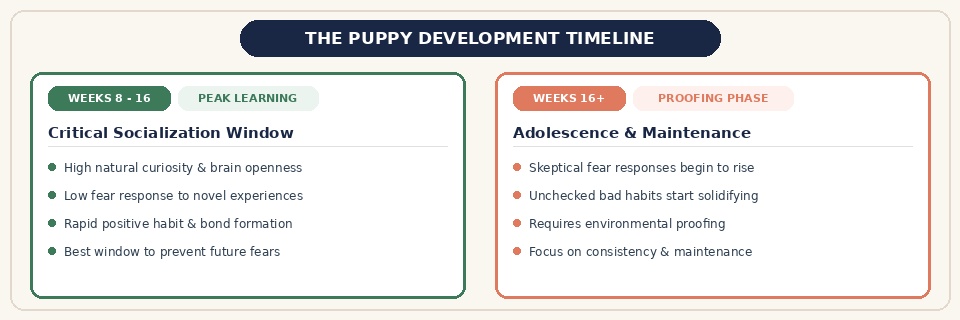
Missing this window does not mean a dog cannot learn later, but it does mean building confidence takes significantly more time and effort. Most of the leash reactivity, fear-based aggression, and severe separation anxiety we treat in adult dogs across West Los Angeles traces directly back to a missed 8-to-16-week socialization period.
An LA Trainer’s Take: Socialization vs. Infection Risk
A major reason local pet parents hesitate to socialize young puppies is the fear of infectious diseases like parvovirus. This concern is valid, but socialization does not mean taking an unvaccinated puppy to a high-risk dog park.
Safe, proactive socialization involves controlled exposure:
- Controlled Sight & Sound: Carrying your puppy through busy West LA shopping districts or sitting on a blanket at a park so they can observe cars, skateboards, and strollers from a safe distance.
- Puppy Class: A safe puppy class where the facility is cleaned and vaccines are verified is a great start to training and socializing your puppy in a controlled manner.
- Vetted Dog Interactions: Arranging playdates exclusively with healthy, fully vaccinated adult dogs owned by friends or family in controlled, private yards.
- Surface & Handling Variety: Walking them on grass, gravel, tile, and wood, while practicing gentle handling of their paws, ears, and mouth for future vet visits.
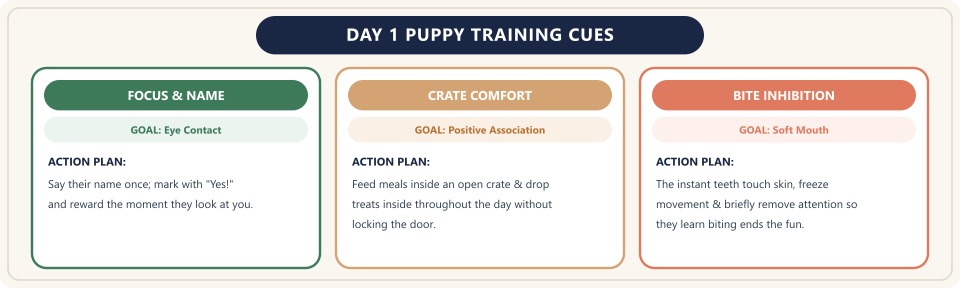
What You Can (and Should) Start on Day 1
You do not need to wait for formal group classes to begin training. Use this simple roadmap to start building good habits the day your puppy arrives:
Essential Puppy Gear for Early Success
Having the right management tools at home prevents bad habits before they start:
- A Comfortable Training Crate: Crate training is essential for house-soiling prevention and nap enforcement. A durable option like the MidWest Homes for Pets Folding Metal Dog Crate includes a divider panel so the crate grows alongside your puppy.
- Teething & Enrichment Toys: Redirect sharp puppy teeth away from your furniture using a textured, fillable Topl stuffable toy filled with frozen wet food or peanut butter.
- A Fast-Access Treat Pouch: Puppies learn within split-seconds. Keeping your hands free with a Dog Treat Pouch ensures your positive reinforcement timing is split-second accurate during daily routines.
How Classes, Private Lessons, and Daycare Fit Together
Training a young puppy works best when you layer different learning environments as they develop:
- Early Private Coaching (Weeks 8–12): New puppy parents can set up a video call to be sure they have a good plan in place while there puppy is too young to come to the facility. We can also do one-on-one private dog training lessons at home to help you troubleshoot house-training, crate crying, and puppy biting in your exact living space.
- Structured Group Classes (Weeks 10–16): Once your puppy receives their second round of vaccinations, joining our specialized group puppy classes provides safe, supervised play with other puppies while teaching them to focus on you around distractions.
- Educational Daycare (Weeks 12+): For busy working schedules, enrolling your pup in our educational dog daycare program in West LA ensures professional handlers reinforce crate routines, loose-leash walking, and impulse control throughout the day.
Don’t Wait for “Ready”—Start Today
If you are waiting for your puppy to reach a certain age before starting their education, the honest answer is: they are already learning every single day.
At I Said Sit!, we have been guiding local puppy owners through this exact developmental window since 1988. Our reward-based methods build confidence and focus without fear or force, setting your pup up for a lifetime of real-world success in Southern California.
Let’s build a puppy plan tailored to your lifestyle.
👉 Book your free 15-minute Discovery Call today or give our West LA team a call at (310) 558-9037 to get started!