
In honor of International Assistance Dog Week, our West LA team wanted to step back from public access rules and training mechanics to talk about something much bigger: the profound, life-changing impact of these extraordinary working partnerships. 🐕
If you have never lived alongside or trained a working service dog, it is easy to view them through the lens of individual tasks—picking up a dropped key or wearing a vest on a plane. But understanding how service dogs help their owners goes far beyond obedience. It is about restoring fundamental human dignity, autonomy, and security in a world that isn’t always built for accessibility.
Here is a look at the real, day-to-day transformation these canine partners bring to households across Los Angeles.
🔑 1. Reclaiming Independence That Was Lost
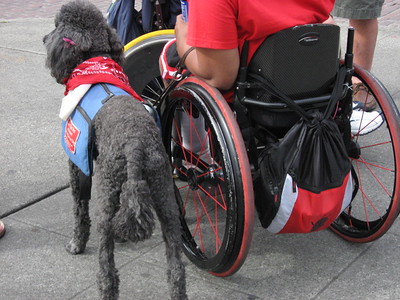
For many handlers, the greatest gift a service dog provides isn’t a single dramatic moment; it is the quiet, everyday autonomy of not having to rely on another person for basic physical needs.
A dog trained in mobility assistance can retrieve dropped phones, push automatic door buttons, or stabilize a handler during a dizzy spell. Instead of waiting for a caregiver or asking a stranger for help, the handler can simply navigate their day on their own terms.
That subtle shift—from feeling reliant on others to feeling self-sufficient—completely changes how someone moves through the world, whether they are navigating a crowded grocery store in Culver City or strolling along the Santa Monica coastline.
🛑 2. An Invisible Safety Net That Never Sleeps
For individuals living with unpredictable medical conditions, such as POTS, epilepsy, or severe diabetes, the primary source of anxiety is often the unknown: When will the next episode hit?
Service dogs trained in medical alert and scent detection act as an early-warning system that is constantly monitoring their handler’s physiological chemistry:
- Scent-Based Early Alerts: Detecting a sudden spike in cortisol or a drop in blood sugar minutes before a physical crash occurs.
- Proactive Interventions: Alerting the handler so they have adequate time to sit down, take medication, or reach a safe location before losing consciousness.
For families who care for someone with a chronic health condition, having a partner who is always “on duty” turns constant fear into manageable peace of mind.
🧠 3. Emotional Grounding in Overwhelming Environments
Beyond physical and medical tasks, service dogs offer a steadying, sensory anchor during psychological crises.
For handlers navigating severe PTSD, panic disorders, or autism, an environment like a bustling LA airport (LAX) or a crowded mall can trigger a complete sensory overload. A service dog is trained to intervene directly in these moments:
- Interrupting Repetitive Behaviors: Nudging a handler’s hands to break a spiraling anxiety loop or self-harming compulsion.
- Deep Pressure Therapy (DPT): Using their body weight on designated pressure points to stimulate the parasympathetic nervous system, lowering heart rate and blood pressure during panic.
- Creating Physical Boundaries: Standing perpendicular to the handler in crowded spaces so strangers cannot step into their personal space.
🛍️ Essential Tools for Working Partnerships
Disclaimer: As an Amazon Associate, we earn a small commission from qualifying purchases made through the affiliate links below at no extra cost to you.
While a service dog’s true power lies in their training and bond, having the right equipment makes public access work much smoother for the handler:
- Clear Identification Vests: Keeping your dog comfortable while signaling their working status to the public is vital. We recommend an adjustable option like the Service Dog Vest, which features breathable mesh and heavy-duty patch panels.
- Hands-Free Safety Leashes: For mobility or psychiatric handlers who need their hands entirely free, utilizing a Hands-Free Leather Leash ensures secure, multipurpose control.
- A Quick-Access Treat Pouch: Precise reward delivery keeps focus sharp during public access outings. The Magnetic-Closing Dog Treat Pouch keeps high-value rewards right at your hip for instant feedback.
☀️ 4. The Confidence to Step Back Into the World
Often, the most isolating aspect of a disability or chronic illness is not the condition itself, but the fear of what might happen if something goes wrong while away from home.
A trained service dog removes that mental barrier. Knowing you have a reliable, highly skilled partner by your side gives handlers the confidence to return to activities they thought they had lost forever:
- Returning to in-person college classes or office environments.
- Navigating crowded venues, farmers markets, and community events.
- Traveling, flying, and exploring new environments without fear.
🤝 A Living Partner, Not Medical Equipment
Under the law, a service dog performs a specific job, but to their owner, they are far more than a tool. They are a living, breathing partner with whom they share a deep, two-way bond built over hundreds of hours of shared training.
That emotional attunement is what makes the partnership so effective. The dog doesn’t just mechanically execute commands; they are tuned in to their handler’s breathing, body language, and subtle shifts in mood in a way that deepens every single day.
🗓️ Exploring a Service Dog for Your Family?
If you or a loved one are considering whether a service dog is the right fit, the most critical first step is a realistic evaluation of your goals, your lifestyle, and the candidate dog’s temperament.
At “I Said Sit!”, we have been guiding Los Angeles families through the rewarding journey of reward-based training since 1988. We offer tailored guidance to help you build a reliable partnership:
- Build customized, programs through one-on-one private dog training lessons.
- Strengthen real-world focus, impulse control, and environmental neutrality around distractions in our educational dog daycare program.
Let’s discuss your unique needs and see if this transformative path is right for you.
👉 Book your free 15-minute Discovery Call today or call our West LA team directly at 📞 (310) 558-9037 to get started!